
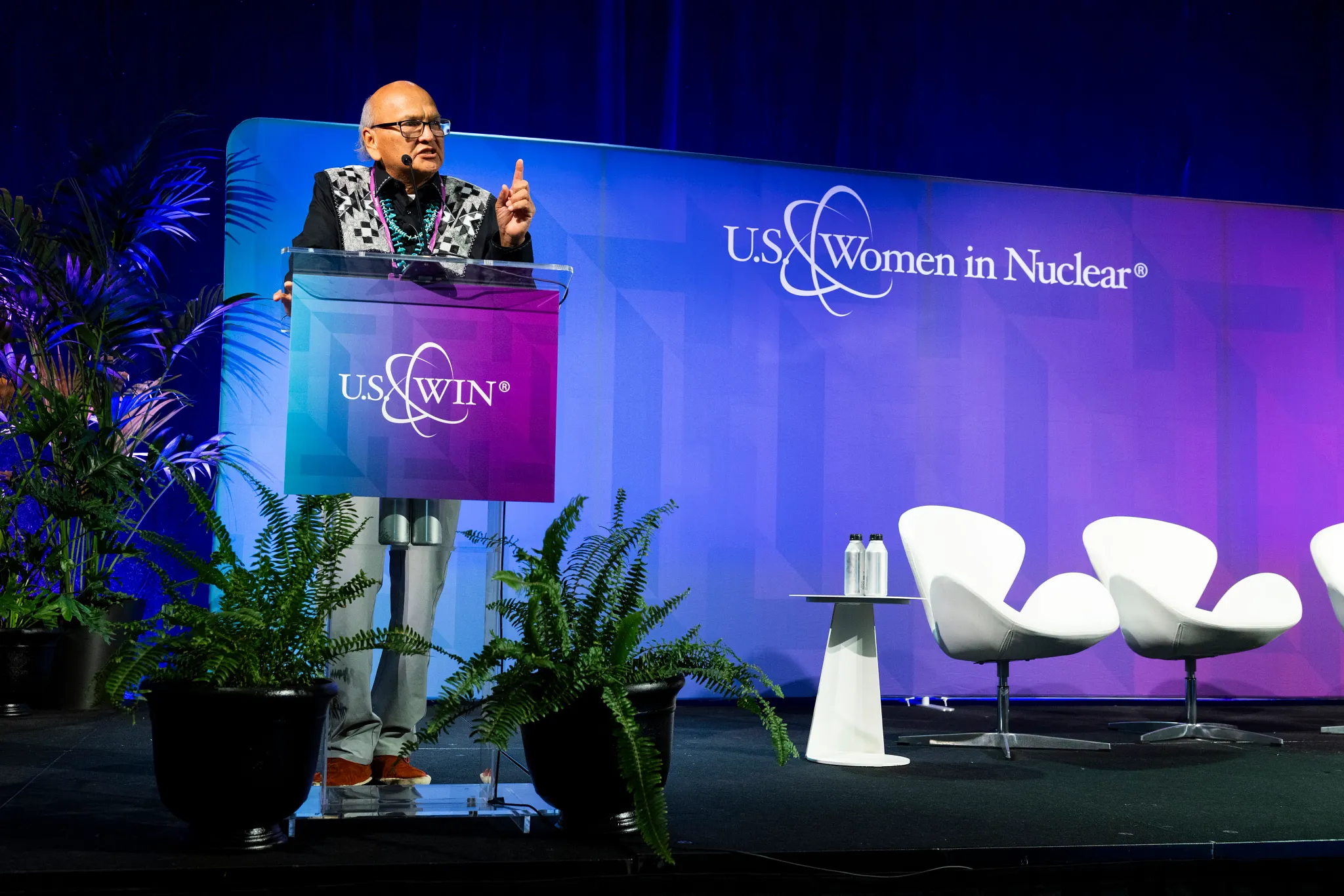
Earlier this month, I had the privilege of attending the U.S. Women in Nuclear (U.S. WIN) National Conference in Seattle, Washington, where industry leaders, professionals, and future workers in the nuclear ecosystem came together at an important moment for the industry. Nuclear energy has renewed momentum, driven by soaring electricity demand from AI, data centers, and other large customers; strong federal and state support; and emerging community acceptance of nuclear as part of the nation’s larger energy future.
Throughout the conference, conversations reflected the scale of this opportunity and the complexity of delivering on it. Sessions explored the future of the nuclear workforce, leadership and professional development, the growing role of AI and automation, industry culture, community engagement, and the broader conditions required to successfully deploy nuclear energy. A consistent message emerged: the next chapter of nuclear will depend not only on advanced technologies, but on the partnerships, people, institutions, and communities needed to turn ambitious plans into successful projects.
Nuclear’s Expanding Role in a Resilient Energy System
Panelists and conversations highlighted several equally important drivers behind the renewed nuclear momentum. Rising electricity demand, growing concerns about reliability and energy security, and the continued transition toward lower-carbon energy sources are creating new space for nuclear power in the national conversation. Nuclear power can be an essential pillar of a resilient, low-carbon, secure energy system through its unique ability to provide greater grid stability and complement intermittent renewable resources. Realizing that potential, however, will require continued advocacy and coalition-building. The nuclear industry has made significant progress in expanding the conversation around nuclear energy, but maintaining momentum will depend on sustained engagement with workers, communities, educators, and industry.
The Need for Partnerships
One of the strongest takeaways was the importance of strategic partnerships across every stage of nuclear deployment. As the industry moves toward new construction, advanced reactor deployment, life extensions, and expanded supply chains, cross-sector coordination will be necessary to prevent costly delays and bottlenecks. Effective deployment requires a difficult alignment across financing, project management, developers, risk mitigation, workforce development, supply chains, siting, community engagement, and waste management. None of these challenges has isolated impacts: workforce shortages can delay construction, supply chain constraints can affect project schedules and costs, siting decisions can stall without community trust, and financing and risk mitigation can determine whether projects advance at all. Successful nuclear project development has been built on strong connections among utilities, developers, suppliers, government, workforce organizations, communities, and other partners.
Nowhere is the need for coordination more apparent than in workforce development. The next wave of nuclear deployment will require hundreds of thousands of skilled professionals. Solutions include stronger pipelines between employers and educational institutions, greater awareness of nuclear career opportunities, expanded training capacity, clearer pathways into occupations, and intentional approaches to retaining experienced workers and transferring institutional knowledge. There are models for each of these solutions, but a very limited history of applying them to nuclear energy.
Panelists and attendees highlighted how workforce development needs to be incorporated into deployment planning from the beginning. Employers, unions, colleges, universities, training providers, workforce organizations, and communities will need to work together well before labor demand peaks if the industry hopes to avoid labor constraints becoming another source of project delay. Organizations such as U.S. WIN play an important role in this by creating professional networks and spaces for mentorship, leadership development, advocacy, and knowledge sharing. Expanding the nuclear workforce will require attracting new workers, but sustaining that workforce will also depend on whether people see opportunities to grow, lead, and build meaningful careers within the industry.
Leadership in a Period of Change
The conference also prompted important conversations about what leadership looks like in a rapidly changing nuclear environment. Leadership in our society is increasingly about guiding people through uncertainty, change, and growth—a challenge particularly visible in conversations around artificial intelligence. AI is already enhancing safety, efficiency, and performance across many nuclear systems, and its role is likely to continue expanding. But the human side of AI adoption will determine the ultimate success of that transformation.
Fear of displacement, skepticism about reliability, and uncertainty about what AI means for individual roles are real responses to technological change. Industry emphasized the need for leaders to be equipped to address those concerns directly, establish appropriate expectations and safeguards, communicate how tools should be used, and help employees develop the skills needed to work effectively alongside new automation technologies. In an industry where safety culture and trust are fundamental, managing technological change thoughtfully will be crucial to worker retention.
The People Behind the Industry
Beyond the technical panel discussions, one of the most memorable parts of the conference was the community U.S. WIN has built for women working in nuclear. According to the latest U.S. Energy and Employment Report, women account for less than a third of workers in nuclear fuels and nuclear electric power generation, underscoring the value of spaces where women can build relationships, connect with mentors and peers, gain a sense of pathways for advancement, and share experiences. This sense of community extended well beyond formal sessions—much thought had gone into creating opportunities for people to connect beyond panel discussions and breakout rooms: mornings began with mat-based barre classes, yoga, and group walks and runs around the city; “Community Conversations” brought together attendees from different career stages for breakfast and lunch to discuss issues facing women in the industry; a land dedication recognized those whose land we were gathering on; an on-site wellness room gave attendees space to regroup and recharge; and a 90’s-themed evening at the Museum of Flight provided a memorable setting for building relationships outside the traditional conference environment.
More important than any individual event was the culture U.S. WIN collectively created. The conference was filled with enthusiastic, welcoming, and humble professionals excited to share experiences, exchange knowledge, and support one another. It was a reminder that professional networks are not peripheral to workforce development—they are part of the infrastructure that promotes retention in an industry where people can envision themselves as future leaders.